
Life at Sea
What It’s Actually Like Working on a Superyacht
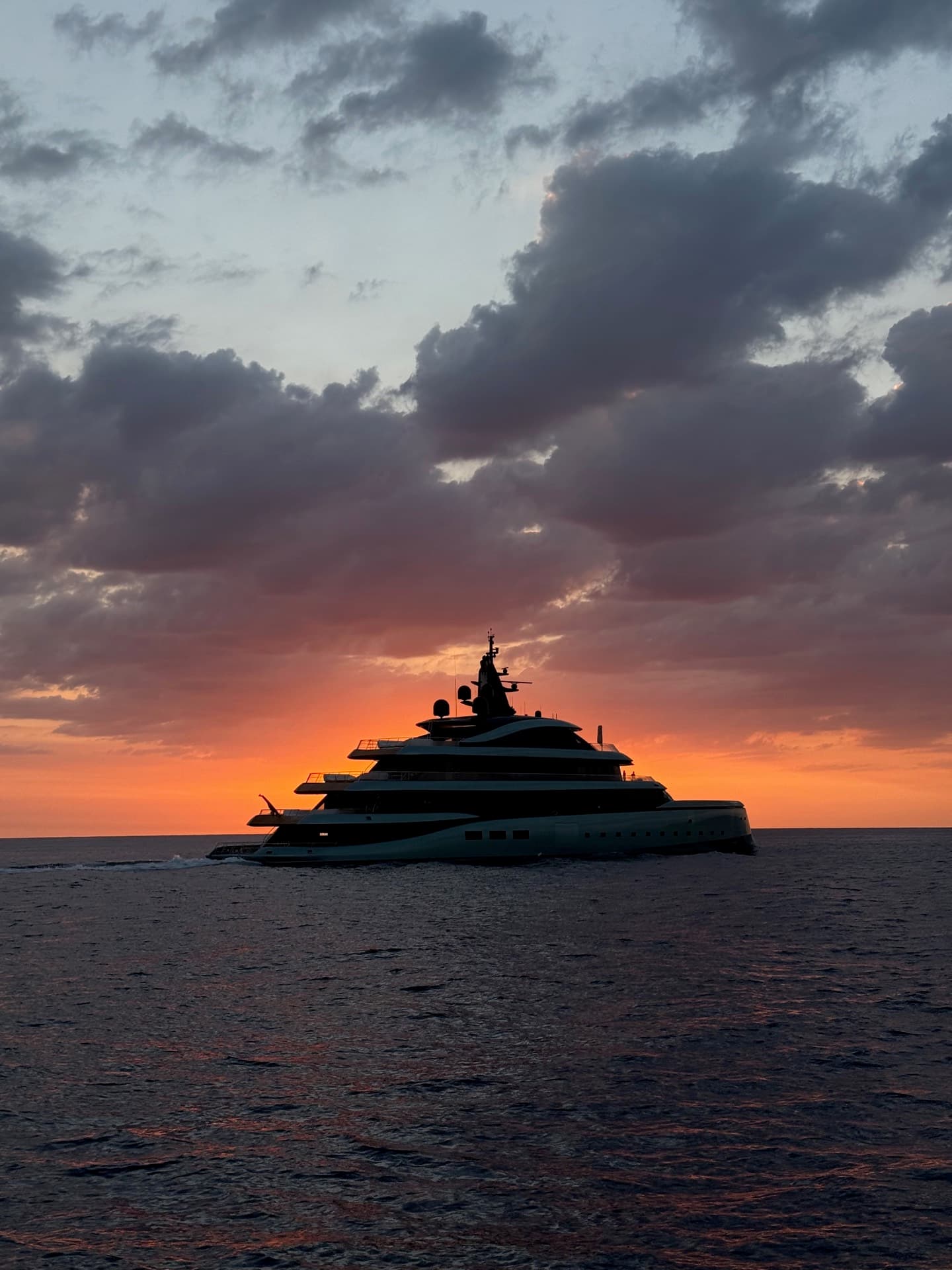
I landed in the Maldives at about 7pm. Met the crew, got shown my cabin, tried to sleep. By 6am we’d left the dock. That was day one. No handover period, no easing into it. Thirty-two days later, after transiting the Suez Canal and covering more ocean than I knew existed, we arrived in La Ciotat. Then I spent the next five months in a shipyard. That was my introduction to superyacht life. Not exactly the Instagram version.
People ask me what it’s like working on a superyacht and I never quite know which part to start with. The honest answer is that it depends entirely on the boat, the crew, and whether you’re alongside, on charter, or somewhere in between. It’s three completely different jobs wearing the same uniform.
The parts nobody photographs
Alongside is the closest thing to a normal routine. Monday to Friday, roughly 8 to 5. Maintenance, projects, cleaning. If you’re on a good crew, people organise things together after hours. Gym sessions, dinners out, exploring whatever port you’re in. Palma felt like home to me. I started there as a greenie in September 2021, South Africa still on the COVID red list, and kept coming back. Something about the place just stuck.
Then charter starts and the dial turns. Long days. Fifteen hours is not unusual. When you’re not working, you’re trying to rest, and even that feels like a task because you know the next call could come at any moment. On another boat I worked, we were short-staffed on deck for an entire season that dragged on for months. Owner onboard almost permanently, night watches on rotation, and nowhere near enough crew to sustain it. After long stretches like that, small things start annoying people. Someone leaves a mug in the wrong spot and suddenly it’s a crew mess standoff. That’s not because anyone is unreasonable. It’s because everyone is running on fumes and there’s nowhere to go and decompress.
My meals on that boat became a ritual of avoidance. Race to the crew mess, eat in about four minutes, plate in the dishwasher, back to my cabin. Every time. The only person onboard I genuinely felt safe around was the chef, who was also my cabin mate. That’s the version of yachting that doesn’t make the recruitment posts.
And then there’s the shipyard. Months of grinding, sanding, painting, fixing things that will break again. Living in a boatyard town with nothing glamorous about any of it. My first boat was a private vessel and I spent the majority of my time aboard in a yard. It teaches you patience. Also teaches you that yachting is about 80% graft and 20% the stuff people actually want to hear about.
The parts that keep you
Four Atlantic crossings. Ports I never imagined I’d see. The Maldives, the Caribbean, Antigua, Mexico, the Med. Waking up anchored somewhere ridiculous and thinking, right, this is the office today. There are mornings in this industry that feel completely surreal and you never fully get used to them. You shouldn’t.
On Kensho, a 75-metre running dual seasons in the Med and Caribbean with a 3:1 rotation, I somehow became the onboard DJ. Chief Entertainment Officer, unofficially. The crew were brilliant. The captain set the tone from day one. Approachable, friendly, clearly in charge. That energy filtered through everything. People wanted to spend time together. We worked harder on Kensho than I did on any other boat, but it never felt like survival. It felt like a team actually functioning.
My favourite memory from all of yachting happened at the end of a season on Kensho. Tied up alongside, first night out as a crew. Everyone finally breathing. And suddenly all those intense moments from the season, the difficult charters, the pressure, the friction, they became stories. Things we could talk about and laugh about together. That was the processing. The harder the season, the better the bonding. Nobody planned it. The culture just allowed it to happen.
So what is it actually like
It’s lonely and loud and boring and extraordinary, sometimes in the same week. You’ll cross oceans and then scrub the same section of hull for three days straight. You’ll meet people you’d never have crossed paths with onshore and some of them will become the closest friends you’ve ever had. You’ll also meet people who make confined living feel like a very specific kind of punishment.
I worked across three vessels over four years. I loved yachting. Genuinely. Could have done another five or ten years. But I felt like I could do more working on the industry than in it. The crews I met, the things I experienced, the burnout I went through and eventually understood, that’s why Haven exists. Because the highs of this career are unreal. And the lows are the kind that nobody prepares you for and most people deal with alone. That bit doesn’t have to stay the same.